Introduction to Dish Drying Rack
Why Every Kitchen Needs a Dish Drying Rack
Let’s be real—no matter how modern your kitchen is, you’re going to have dishes to dry. Whether you’re rinsing your coffee mug or washing a full load of plates after dinner, a dish drying rack is that unsung hero every kitchen deserves. It’s not just a utility—it’s a tool that saves you time, space, and effort while keeping your countertops squeaky clean.
Think about it: instead of laying out a towel and hoping for the best, a rack organizes your dishes upright so they dry faster and more hygienically. Plus, they reduce the risk of water spots and bacteria build-up. This is especially helpful if you’re someone who hand washes dishes regularly. Even for those who rely on dishwashers, a drying rack is perfect for delicate items like wine glasses, chef’s knives, or plasticware that can’t handle heat drying.
And let’s not forget the aesthetics—modern dish racks can be both functional and stylish, blending seamlessly with your kitchen decor. Some even come with multiple tiers, utensil holders, and separate compartments to keep everything in its place.
Bottom line: If you’re looking to bring some sanity to your post-meal cleanup routine, investing in the right drying rack is a game-changer.
Evolution of Dish Drying Rack: From Simple to Smart
The humble drying rack has come a long way since the days of a wobbly wire frame or a thin plastic tray. Today, these kitchen must-haves are smarter, sleeker, and way more efficient. We now have over-the-sink models, two-tiered wonders, stainless steel structures with rust-resistant coatings, and even dish racks with built-in fans!
Manufacturers have leaned into innovation, offering collapsible racks for tight spaces, customizable compartments, and even self-draining trays that eliminate the need for constant wiping. High-end versions include bamboo wood for eco-conscious homes or sleek stainless steel that complements modern minimalist kitchens.
As our kitchens evolve with smart technology and space-saving innovations, so do our expectations for everyday tools. That’s why choosing the right rack today involves more than just picking a color—it’s about knowing your kitchen space, habits, and personal style. Ready to dive into the types? Let’s go!
Types of Dish Drying Rack
Countertop Dish Racks
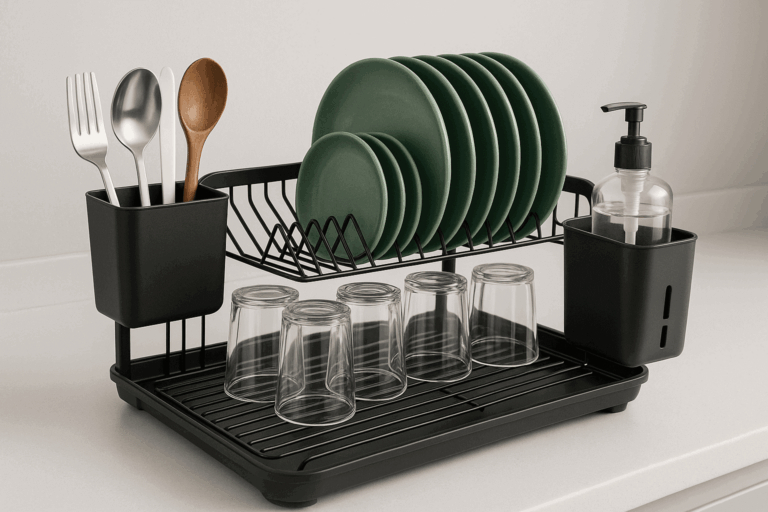
Countertop dish racks are the most traditional and widely used variety—and for good reason. These racks are designed to sit beside your sink, giving you easy access and minimal movement when transferring dishes. They come in a wide range of sizes, shapes, and materials, including plastic, stainless steel, bamboo, and silicone.
The best part about countertop models? Their versatility. Whether you live alone or have a big family, you can find a dish rack that fits your needs. Some have multi-tiered designs, extra utensil holders, or even wine glass-specific slots. Many modern versions come with sloped or removable drainage trays, ensuring that water doesn’t pool underneath and create mold or bacteria.
They’re also incredibly user-friendly. No installation is needed—just unpack, place it on your counter, and get drying. And if you like rearranging your kitchen often, this is the easiest type to move around.
However, countertop racks do take up surface area, which can be a dealbreaker for smaller kitchens. If you’re short on space but love this style, look for compact or modular versions designed for tight countertops.
Over-the-Sink Dish Racks
Over-the-sink dish racks are a genius solution for space-challenged kitchens. These racks are designed to sit across or above your sink, allowing water to drip directly into the basin—no more messy countertops or soggy dish towels.
This style is especially useful if you have a small kitchen with limited counter space. With multiple tiers and dedicated spaces for dishes, cups, and utensils, they make use of vertical space rather than horizontal, making them a real game-changer for apartment dwellers or tiny homes.
The best over-the-sink racks are adjustable and made of rust-resistant stainless steel or aluminum. Some come with rubber grips to prevent slipping and add extra stability. Bonus features may include knife slots, chopping board holders, and even soap dispensers!
On the downside, you’ll need to measure carefully. These racks require a sink of specific width and depth to sit properly without tipping. But if you’ve got the right setup, this type of dish drying rack delivers on both form and function.
Wall-Mounted Dish Racks
Wall-mounted racks are a permanent and space-saving solution for serious kitchen organizers. These racks are typically drilled into the wall above your sink or counter and are great for freeing up counter real estate.
Most wall-mounted racks are made from sturdy materials like stainless steel or high-grade plastic. They usually come with compartments for plates, bowls, and utensils and include drainage trays that channel water directly into the sink.
The main benefit? Free space and a clean, minimalist aesthetic. They’re perfect for small or medium kitchens and can even double as a storage solution when you’re not drying dishes.
The downside is the installation—once it’s up, it’s staying there. So it’s not ideal for renters or those who like to move things around. But if you’re aiming for a tidy, organized, and efficient setup, this type of rack is worth the investment.
Foldable and Collapsible Dish Racks
Foldable and collapsible dish racks are the travelers of the drying rack world. Lightweight and incredibly space-efficient, these racks are ideal for small kitchens, RVs, dorms, or camping trips.
Made mostly from silicone, plastic, or coated metal, they can be flattened and stored in drawers or hung up when not in use. Despite their minimalist design, many of these racks include smart features like separate utensil compartments, non-slip bases, and even built-in spouts for drainage.
What makes them so appealing is the convenience factor. No setup, no bulk, and no fuss. They’re also easy to clean and resistant to mold. However, they typically hold fewer items than full-sized counterparts and may lack durability over time if used heavily.
But if portability and compactness are your top priorities, this category is your best friend.
Top 5 Best Dish Drying Rack in 2025
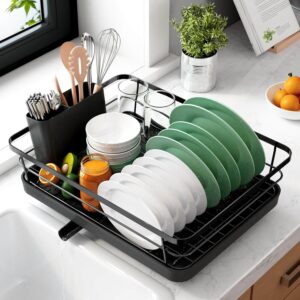
Keep your kitchen counter tidy with the Kitsure Dish Drying Rack! This compact rack (12”W x 15.5”L) is ideal for small kitchens, apartments, and RVs.
It holds up to 10 plates, plus bowls, cups, and cutlery – all while saving precious space. Made of rust-resistant stainless steel with a plastic drainboard, it’s easy to clean and requires no tools to assemble.
The detachable cutlery holder keeps utensils organized. Durable, sleek, and efficient – a must-have for every modern kitchen!
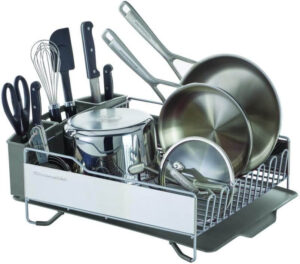
Need more room for your dishes? The KitchenAid Full Size Dish Rack has you covered! With a spacious design, it easily fits plates, bowls, glasses, and even pots and pans.
Made with rust-resistant, heavy-duty satin-coated steel, it’s built to last. The angled drainboard keeps your counter dry by channeling water straight into the sink.
It also includes a removable flatware caddy with adjustable compartments for easy unloading. Non-slip feet keep it steady on any surface.
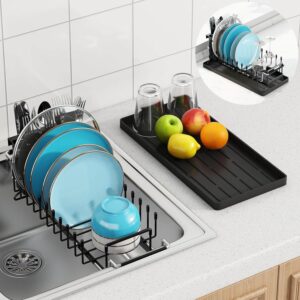
Maximize your kitchen space with the ANTOPY Small Dish Drying Rack! Designed for 1–2 people, this mini rack fits over sinks (14″–19″) or on countertops using the included silicone drying mat.
It’s expandable, space-saving, and super easy to use. Made of sturdy stainless steel with a rust-resistant black coating, it holds dishes, bowls, and utensils effortlessly.
Includes a detachable 3-slot cutlery holder and 10 plate slots—no tools needed for setup.
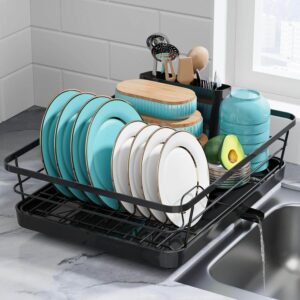
Simplify your kitchen routine with the Sakugi Stainless Steel Dish Rack! Compact yet functional (15.6″ x 12″ x 5″), it holds up to 6 plates, bowls, and glasses—perfect for small kitchens and apartments.
Crafted from rust-proof stainless steel, it features a swivel drain spout to direct water into the sink, keeping countertops dry. No tools needed for setup, and the anti-slip feet keep it steady.
Comes with a two-slot cutlery holder to organize utensils with ease.
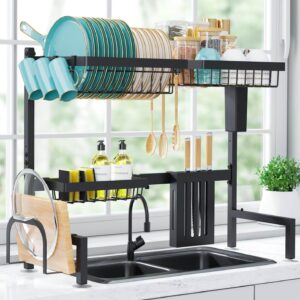
Upgrade your kitchen with the Sakugi 2-Tier Over-the-Sink Dish Drying Rack! Made of premium 304 stainless steel, it offers rust-free durability and a sleek black finish.
Adjustable from 30″ to 33.9″, this large-capacity rack holds plates, bowls, glasses, knives, cutting boards, and more—all while draining water straight into your sink.
Includes utensil and knife holders, 5 utility hooks, and a cutting board rack. Easy to install, clean, and perfect for saving countertop space in busy kitchens.
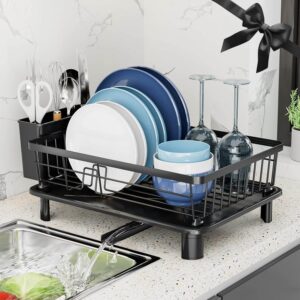
Keep your countertop neat and dry with the GAOKASE Space-Saving Dish Rack. Made from high-quality metal with an anti-rust coating, this compact (11″ x 15″) rack is ideal for small kitchens.
It features an hourglass-style drainboard, removable utensil holder, and built-in drainage system that channels water directly into the sink.
Non-slip heightening pads keep it stable and elevated, while the removable components make it easy to clean and customize. No tools needed for setup!
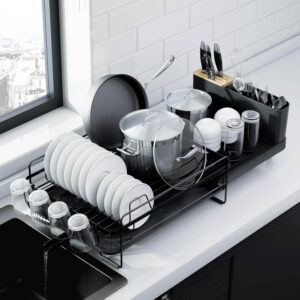
Organize your kitchen with the Kitsure Large Dish Drying Rack, designed to expand from 19.2″ to 26.7″ to fit most countertops.
This multifunctional rack features compartments for dishes, cutlery, and cups, plus a rust-resistant, fingerprint-free coating for long-term durability.
With non-slip silicone feet and a raised safety fence, your kitchenware stays secure and stable. Easy to clean and install—no tools needed!
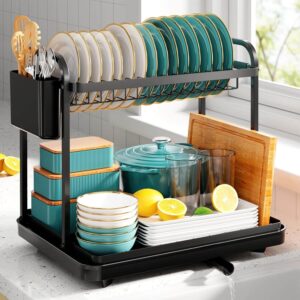
Keep your kitchen organized with the Sakugi Stainless Steel Dish Drying Rack. Its 2-tier design (15″ x 11.4″ x 15″) holds dishes, bowls, pans, knives, and glasses—perfect for families of 3–4.
Made from premium rustproof stainless steel with a waterproof black coating, it’s built to last. Includes a removable cutlery holder, drainboard, and multiple accessories.
Easy to install, easy to clean—no tools required!
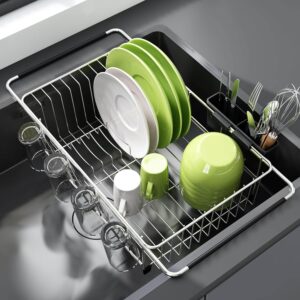
Maximize your kitchen space with the JASIWAY Stainless Steel Dish Drying Rack. This expandable rack fits inside, over, or on the sink, stretching from 15.5″ to 22.8″ to suit most sinks.
Compact yet strong, it holds up to 8 plates and 70 lbs, making it ideal for small kitchens and families.
Built with food-grade stainless steel, it’s rustproof, scratch-resistant, and easy to install—no tools needed! Includes a removable cutlery holder for added convenience.

Declutter your kitchen with the 7 code 2-Tier Dish Drying Rack, designed for maximum capacity and convenience.
This space-saving rack features two tiers for plates, bowls, pans, and mugs, along with a detachable utensil holder and cup rack. Its auto-draining board comes with a 360° swivel spout that directs water straight into the sink—no mess, no puddles.
Built from rust-resistant coated metal, it’s sturdy, durable, and easy to install—no tools needed!
Key Features to Look for in a Dish Drying Rack
Material Durability and Rust Resistance
When it comes to choosing the right dish drying rack, the material it’s made of isn’t just about looks—it directly affects how long the rack will last and how well it performs over time. One of the most important features to consider is rust resistance. After all, you’ll be placing wet dishes on it regularly, so the last thing you want is a rust-covered rack sitting in your kitchen.
Stainless steel is by far the most popular and recommended material. It’s sleek, strong, and naturally rust-resistant—especially when treated with a high-grade coating. Brands that use 304 stainless steel (also known as food-grade steel) offer superior resistance to corrosion and are built to withstand daily wear and tear.
Plastic racks, while generally less expensive, are not as durable and may crack or stain over time. However, high-quality BPA-free plastics can still serve you well if you’re on a tight budget or prefer a lightweight option.
Bamboo and wooden racks bring a natural, rustic charm but require extra care. These need to be dried properly after each use to avoid mold and warping. Many of them now come with waterproof coatings, which adds to their appeal while still being environmentally friendly.
So, ask yourself: Are you going for durability, aesthetics, or both? Choose a material that fits your lifestyle and kitchen environment to avoid constant replacements and maintenance headaches.
Drainage and Water Collection System
A drying rack is only as good as its drainage system. If water is pooling underneath or dripping all over your counter, you’re creating the perfect environment for mold and bacteria. That’s why smart drainage design is essential for any modern kitchen setup.
Look for a rack with a self-draining board or a sloped base that channels water directly into the sink. Many premium models come with removable drip trays that are easy to clean and prevent standing water. Some even have rotatable spouts that let you angle the water flow based on your counter layout.
For over-the-sink racks, this is even more convenient—water drains directly into the sink, leaving zero mess behind. Foldable racks often lack this feature, so you may need a separate drying mat to catch drips.
Another underrated feature? Ventilation. Racks with open structures or widely spaced slots help air circulate better, making dishes dry faster and reducing the risk of smelly, soggy sponges or musty odors.
So don’t overlook this part—investing in a dish rack with excellent drainage will save you from a lot of cleanup and keep your kitchen smelling fresh.
Size and Storage Compatibility
One size definitely doesn’t fit all when it comes to dish racks. Before clicking “Buy Now,” take a moment to assess your kitchen layout. A rack that’s too big will crowd your counter, while one that’s too small won’t hold your dish load. You need a balance of capacity and compactness.
Measure your available space—width, depth, and even height. Also consider whether you have room for a permanent countertop rack or if a collapsible one would suit your needs better. Over-the-sink racks are ideal for compact kitchens, while two-tier racks are great for large households with a lot of dishware.
Think about how often you cook or entertain. If you’re constantly dealing with pots, pans, and plates, opt for a larger rack with multiple tiers and sections. If you mostly use a dishwasher and just need a place to dry fragile items, a mini rack or drying mat might be sufficient.
Also, storage matters. Can it be folded away when not in use? Does it tuck neatly into a cabinet or under the sink? These considerations ensure that your dish rack doesn’t become a permanent eyesore.
Choose a design that fits not just your kitchen, but your habits.
Utensil Holders and Cup Racks
A good drying rack doesn’t just hold plates—it’s got to keep your spoons, forks, knives, and glasses organized too. That’s where utensil holders and cup racks come into play.
Look for racks that come with removable utensil compartments. These are easier to clean and can be repositioned to suit your preferences. Some even have compartments with drainage holes, which prevent water from pooling at the bottom.
Cup racks are another essential. A designated spot for mugs, tumblers, or wine glasses not only keeps them safe from tipping over but also ensures proper drying. Racks with non-slip silicone holders or rubber-tipped prongs add an extra layer of protection for your glassware.
Knife slots are an added bonus—some racks include special holders that allow knives to dry safely without dulling or posing a hazard.
These little features might seem minor, but they can greatly enhance the functionality and cleanliness of your drying routine. You’ll spend less time reorganizing and more time enjoying a tidy, clutter-free kitchen.
How to Maintain Your Dish Drying Rack
Cleaning Tips for Longevity
Let’s face it: your dish drying rack handles a lot of moisture, soap residue, and food particles every single day. If left unchecked, it can turn into a breeding ground for bacteria and mold—which completely defeats the purpose of clean dishes. That’s why regular maintenance is key to making sure your drying rack stays hygienic and lasts as long as possible.
Start by checking if your rack is dishwasher-safe. Some stainless steel and plastic racks can be tossed in the dishwasher for a deep clean. For others, a good old-fashioned scrub will do the trick. Use a mild detergent and warm water to wipe down the entire surface, paying special attention to corners, joints, and drain trays where grime loves to hide.
If your rack has removable parts, take them apart once a week and soak them in a mixture of water and vinegar or baking soda. This helps cut through grease, eliminate odors, and sanitize everything naturally.
A toothbrush or small scrub brush is your best friend for reaching into tiny crevices. And don’t forget to dry all components thoroughly before reassembling—especially if your rack is made of bamboo or other moisture-sensitive materials.
Set a weekly or bi-weekly cleaning routine, and your dish rack will look and perform like new for years. After all, why go through the effort of cleaning dishes just to put them back in a dirty drying station?
Preventing Mold and Mildew
One of the biggest issues with poorly maintained dish racks is the dreaded mold and mildew. These nasty fungi thrive in damp environments and can easily make a home in your rack’s corners, trays, or utensil compartments if you’re not careful.
The best way to prevent mold is to keep things dry. Even though it’s a drying rack, letting it stay constantly wet is asking for trouble. Make sure your rack has good airflow and a built-in drainage system. Empty and wipe down drip trays daily. If you notice water collecting under the rack, it’s time to reposition it or improve the drainage.
Another pro tip? Use a microfiber cloth to dry the rack itself once you’re done with the dishes. Microfiber is super absorbent and excellent at removing moisture.
For added protection, spray your rack weekly with a natural antifungal solution—you can make your own with equal parts white vinegar and water. Let it sit for 5–10 minutes before rinsing off and drying.
Also, avoid overloading your rack. Cramming it full restricts air circulation, which slows drying and increases the risk of mold growth. Organize dishes in a way that allows air to move freely between them.
Stay consistent, and your dish drying rack will remain clean, fresh, and free from harmful mold buildup.
Benefits of Using a Quality Dish Drying Rack
Keeps Kitchen Countertops Dry and Organized
A high-quality dish drying rack isn’t just a tool—it’s a space management solution. Ever hand-washed a few dishes only to find water all over your countertop? A well-designed drying rack prevents that messy chaos by collecting drips and guiding them into your sink or onto a tray, keeping your kitchen clean and safe from water damage.
Most modern racks come with angled drain boards, rotating spouts, or anti-leak trays that ensure excess water doesn’t linger where it shouldn’t. This helps protect your countertops—especially if they’re made of wood or laminate, which can warp or stain easily.
Plus, these racks help you stay organized. Everything has its place: plates slide into grooves, cutlery sits neatly in compartments, and cups are held upright so they dry without pooling water. When your rack is well-organized, your entire kitchen feels more put-together.
It also saves time—no more laying towels or stacking dishes like a Jenga game. You get more functionality out of the same kitchen space, especially if you go for vertical or over-the-sink models.
If you’re someone who likes efficiency, cleanliness, and visual order, investing in a high-quality rack is an upgrade worth making.
Improves Hygiene and Airflow
One of the lesser-known but most valuable benefits of using a proper dish drying rack is how it improves hygiene in your kitchen. Wet dishes left flat on a counter or towel can breed bacteria. When water has nowhere to go, it stagnates—giving germs the perfect environment to multiply.
That’s why drying racks with built-in airflow systems and elevated platforms are crucial. They allow air to circulate around each item, promoting faster drying and minimizing the risk of mold, mildew, or bacterial contamination.
Utensils, especially, benefit from this. Instead of being tossed into a damp drawer or bunched together in a mug, they stand upright, spaced out, and fully exposed to airflow.
And because racks are made with anti-bacterial materials—like coated steel or BPA-free plastic—they’re less likely to harbor harmful germs to begin with. Some high-end options even feature microban protection or other anti-microbial coatings.
Bottom line? If you care about your health and cleanliness, ditching the old towel routine for a rack with good airflow is one of the easiest and smartest upgrades you can make.
Common Mistakes to Avoid When Buying a Dish Drying Rack
Choosing the Wrong Size
One of the most common mistakes buyers make is choosing a dish rack that’s either too big or too small for their kitchen space. You might fall in love with a feature-rich two-tier rack, only to realize it doesn’t fit on your counter or blocks access to your sink. On the flip side, a small rack might look neat and compact online, but in reality, it barely holds enough dishes for a single meal.
Before hitting that purchase button, take out your measuring tape. Measure the area where you plan to place the rack—length, width, and height. Also, take into account how close your faucet is or whether there are shelves above your sink or counter that could interfere.
For over-the-sink models, measure both the inner and outer sink width to make sure the rack will sit securely without tipping. A few centimeters off can make a huge difference in functionality and stability.
Also, consider your dishwashing habits. Do you handwash pots and pans regularly? Then you’ll need a rack with larger slots and more drying space. Do you only need something for coffee cups and utensils? A compact rack might be all you need.
Choosing the wrong size can quickly turn a helpful kitchen tool into a source of frustration. So, save yourself the headache and match the rack to both your kitchen layout and dishwashing lifestyle.
Ignoring the Drainage Design
Drainage is the unsung hero of any effective dish drying rack, yet it’s the feature most often overlooked. If you ignore how your rack manages water runoff, you’re setting yourself up for wet counters, water stains, and worse—mold and bacteria.
Too many people fall for attractive designs without checking how water drains out. Some racks don’t have a drainage board at all, or worse, come with a flat tray where water just collects. This stagnant moisture is a disaster waiting to happen, especially in humid kitchens.
Look for models with a sloped drainage tray or a rotatable spout that directs water straight into the sink. These features eliminate the need to constantly wipe down your counter or empty a pool of water sitting under the rack.
Also, watch out for blocked or hard-to-clean spouts. If the drainage path isn’t easily accessible, food particles and grime can build up quickly.
In short, a beautiful drying rack with poor drainage is like a sports car with no tires—it may look good, but it won’t get the job done. Always make sure your rack has a thoughtfully engineered drainage system that fits your kitchen’s setup.
Best Dish Drying Racks for Small Kitchens
Compact and Multi-Purpose Options
Living in a studio apartment, dorm, or tiny home? Then you know the struggle of trying to do everything in a space the size of a shoebox. But don’t worry—there are plenty of compact dish drying racks designed specifically for small kitchens.
Look for multi-functional or stackable racks that give you more bang for your buck. These often include removable trays, built-in utensil holders, and even slots for cutting boards. Some even fold away completely when not in use—perfect for minimalist living.
Over-the-sink drying racks are another game-changer. They use the space above your sink, freeing up your precious countertops. Many models are height-adjustable or expandable, so you can customize the setup based on your sink’s size.
Another space-saver? Roll-up dish drying mats. These silicone-coated metal rods roll out over your sink, creating instant drying space and rolling back up when you’re done. They’re portable, dishwasher-safe, and highly efficient.
When space is tight, efficiency is everything. Choosing a compact yet functional rack ensures you don’t sacrifice convenience or cleanliness—even in the smallest of kitchens.
Vertical vs. Horizontal Racks
When you’re working with limited space, the orientation of your drying rack can make a huge difference. Should you go vertical or horizontal? Each has its pros and cons, and the right choice depends on your kitchen’s layout.
Vertical racks are great for small counters. They build upward, giving you multiple tiers to store plates, bowls, cups, and utensils without eating into your work surface. This is especially helpful in galley-style kitchens where counter space is at a premium. Plus, they often come with hooks or add-ons for even more functionality.
On the other hand, horizontal racks are often more stable and accessible. If you have a wider counter but limited overhead space, a horizontal rack with a built-in drainboard may suit you better. They’re usually easier to clean and more intuitive to use.
Pro tip: Choose a modular rack that lets you adjust the tiers or remove components as needed. That way, you’re not stuck with a rigid structure and can tweak the setup depending on your dish load or counter layout.
Ultimately, it’s all about making the most of the space you have—and the right orientation can make your dish drying routine way more efficient.
How to Organize Your Dish Drying Rack Efficiently
Maximize Space with Smart Layouts
Even the best dish drying rack can become a mess if you don’t use it efficiently. A well-organized rack not only speeds up drying time but also keeps your kitchen looking neat and functional. So, how can you maximize your rack’s layout?
Start by grouping similar items together. Plates should go into slots that hold them upright—this allows for better airflow. Bowls should be tilted on their sides to avoid water pooling, and glasses should be placed upside-down in designated cup holders if available.
Use the utensil holder properly by separating knives, forks, and spoons to avoid overcrowding. This prevents them from nesting together and allows each piece to dry completely. For racks with multiple compartments, dedicate each section to a specific type of dish—like mugs, pans, lids, or baby bottles.
If your rack is multi-tiered, designate each tier for a specific function. For example, the top for small plates or glassware, and the bottom for pots, pans, or mixing bowls. Avoid placing heavy items on upper tiers—they can topple the entire structure or damage the rack.
Also, don’t forget to rotate items if needed. If you’re drying a large batch, once the first batch is partially dry, remove them and replace them with a new load. This kind of “dish rotation” keeps the flow going and avoids clutter.
Finally, consider adding accessories like hooks, suction holders, or additional trays to expand functionality. A well-organized rack turns a chore into a smooth and satisfying routine.
Avoiding Overloading
Overloading your dish drying rack is like trying to stuff a week’s worth of laundry into a single drawer—it doesn’t end well. Not only does it look chaotic, but it also defeats the purpose of drying your dishes properly.
When you overcrowd the rack, air can’t circulate freely, meaning your dishes will stay damp longer. That increases the chances of water spots, bacteria growth, and even mold. Plus, if your rack is not built for heavy-duty use, it could bend or break under the weight of too many items.
It’s important to respect the capacity of your rack. Only place as many dishes as the rack can comfortably hold. If you often find yourself with more items than your rack can handle, consider getting a second compact rack or a collapsible drying mat as a backup for overflow.
Also, avoid stacking dishes on top of each other. Not only is it unsafe—dishes can slip and fall—but it also leads to poor drying and longer cleanup time.
Be intentional. Prioritize which dishes need to dry immediately, and let others wait. You’ll get a cleaner kitchen and longer-lasting tools if you take your time and avoid the overload trap.
Customer Reviews and Real-Life Feedback
What Users Love and Hate
Before making a purchase, it’s always smart to hear from people who’ve already walked the path. Customer reviews and real-life experiences offer insights you won’t find in a product description.
What users love:
- Stainless steel builds are consistently praised for their durability and sleek appearance.
- Over-the-sink racks get high marks for space-saving design and efficient drainage.
- Modular or multi-tier racks are appreciated by large households for their capacity.
- Products with easy-to-clean parts and removable trays are always a hit.
What users hate:
- Cheap plastic racks often crack or stain quickly.
- Poor drainage designs that cause pooling water are a major complaint.
- Fixed components (like immovable utensil holders) are a common frustration.
- Some racks are advertised as “universal fit” but don’t actually fit all sink sizes—so inaccurate measurements can lead to returns.
Before you buy, browse reviews across multiple platforms, including YouTube reviews, blog posts, and product forums. The extra research pays off in finding a rack that fits your needs and lasts for years.
Conclusion
Choosing the right dish drying rack might seem like a small decision, but it can make a big impact on your kitchen’s efficiency, cleanliness, and overall vibe. From compact collapsible options for tiny homes to two-tiered giants for large families, there’s a rack out there to suit every need and lifestyle.
By focusing on features like drainage, material, size, and accessories, you can invest in a solution that saves time, promotes hygiene, and keeps your kitchen organized. Whether you’re eco-conscious, budget-savvy, or all about aesthetics, there’s a perfect rack waiting for you.
Don’t just settle for the first one you see—shop smart, read reviews, and pick a rack that fits seamlessly into your kitchen routine. Your dishes (and your counters) will thank you.
FAQs
- What is the best material for a dish drying rack?
Stainless steel is generally the best choice due to its durability and rust resistance. Bamboo is great for eco-conscious buyers, while BPA-free plastic is a good budget-friendly option. - Can a dish drying rack cause mold?
Yes, if not cleaned regularly or if water pools underneath, mold can form. Choose a rack with good drainage and clean it weekly to avoid this. - How often should I clean my dish rack?
Ideally, you should rinse it daily and deep clean it weekly using vinegar or mild detergent to remove grime and prevent bacteria build-up. - Are over-the-sink racks better?
They’re excellent for small kitchens as they save counter space and allow direct water drainage into the sink. However, they may not fit all sink types, so measurements are key. - What’s the most durable brand?
Brands like Simplehuman, OXO, and KitchenAid are known for their build quality, durability, and thoughtful design.
Please don’t forget to leave a review.